About the Orthodontics Laboratory:
First: Introduction
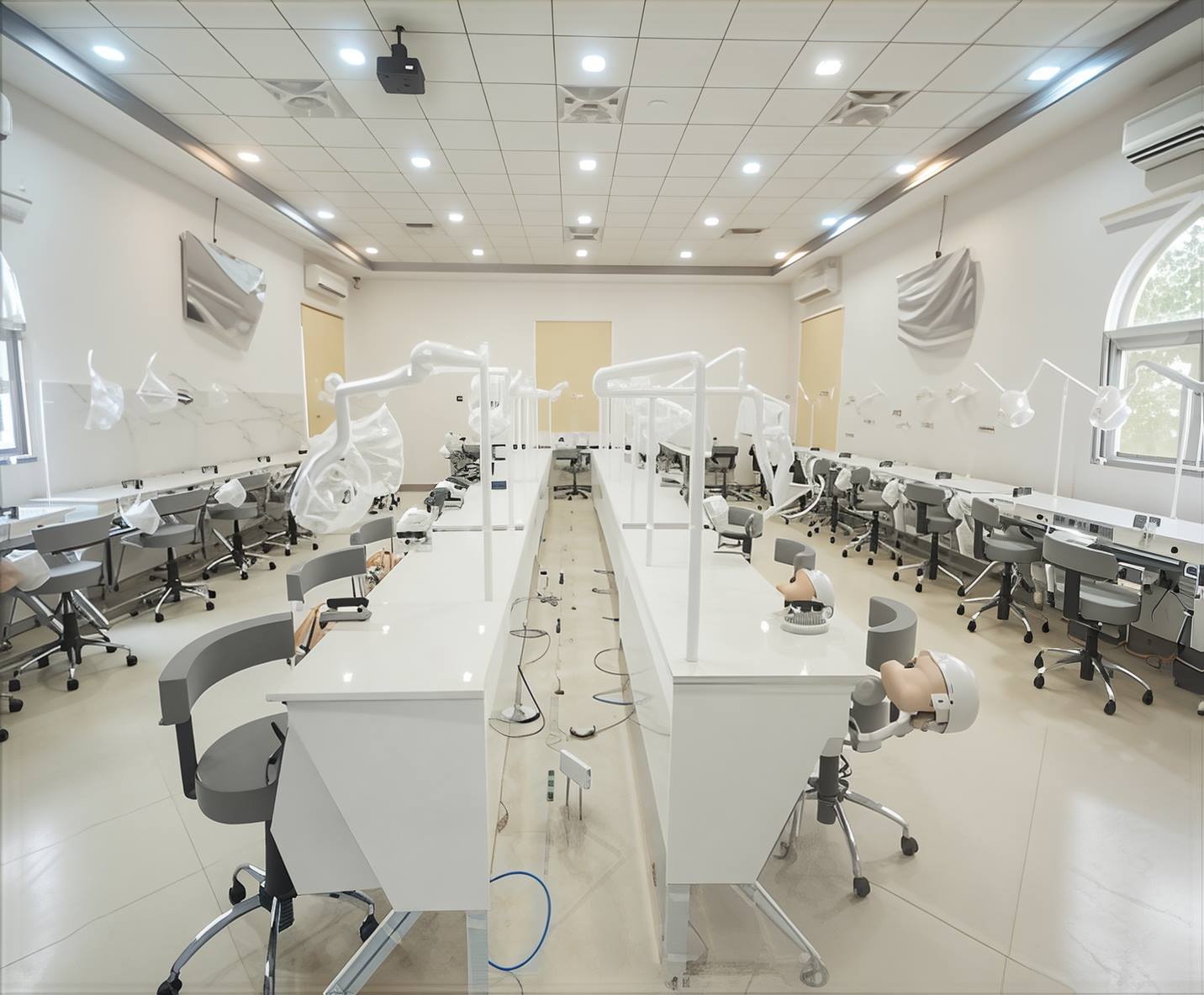
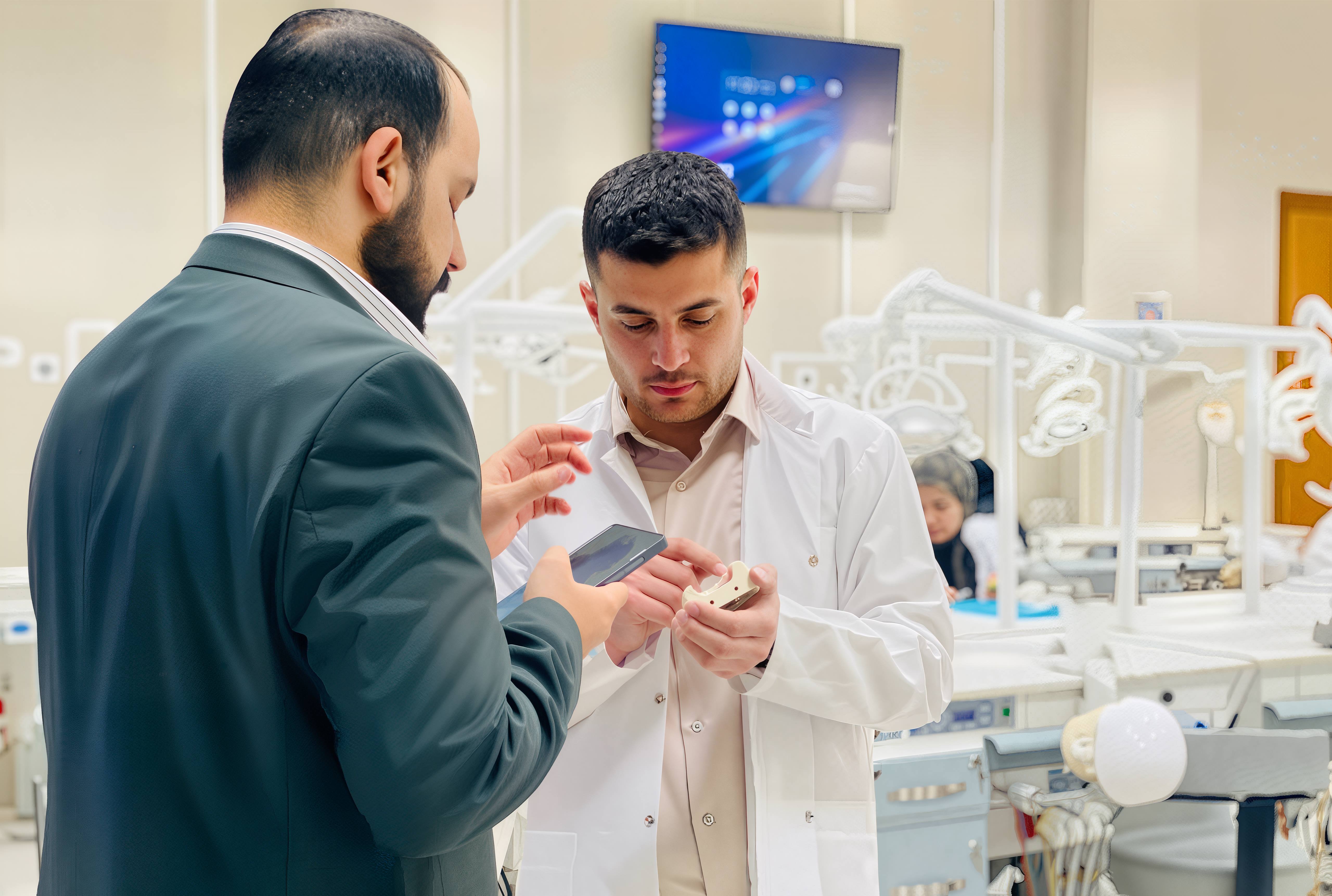
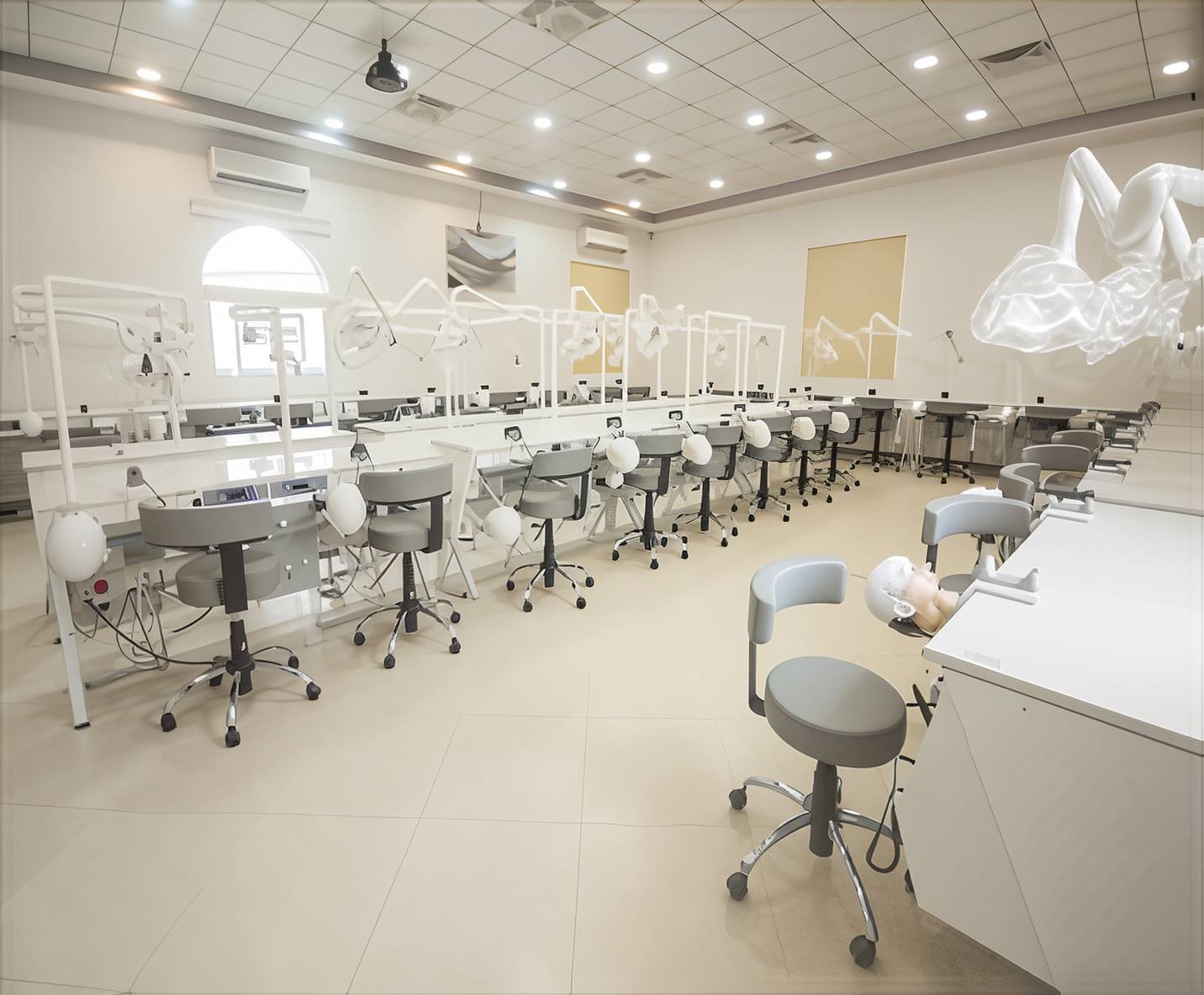
The Orthodontics Laboratory is considered one of the essential applied educational laboratories for fourth-year students at the College of Dentistry. It aims to bridge theoretical knowledge in orthodontics with practical application inside the lab. The laboratory focuses on training students in the steps of fabricating removable orthodontic appliances, in addition to developing wire bending skills with scientific and manual precision. This prepares students for the clinical stage and enables them to handle mild to moderate orthodontic cases efficiently. The laboratory has been designed according to modern academic standards to serve as an integrated educational environment that enhances practical learning, supports the achievement of program outcomes, and aligns with quality and academic accreditation requirements.
Second: Vision and Mission
Vision
Leadership in applied education for orthodontics by preparing students equipped with the scientific knowledge and practical skills required to design and fabricate removable orthodontic appliances.
Mission
Providing an advanced training environment that enables students to understand the mechanical principles of orthodontics and apply them practically by training them in fabricating removable appliances and precise wire bending, thereby enhancing their readiness for clinical practice.
Third: Educational Objectives of the Laboratory
1. Introducing students to the fundamental components of removable orthodontic appliances.
2. Training students to read and analyze orthodontic appliance designs.
3. Developing skills in bending various types of orthodontic wires.
4. Teaching students the steps of fabricating removable appliances from initiation to finishing.
5. Enhancing students' understanding of the mechanical principles of tooth movement.
6. Fostering manual dexterity and discipline in laboratory work.
Fourth: The Laboratory's Role in Supporting the Curriculum
The Orthodontics Laboratory serves as an integral counterpart to theoretical lectures, helping students translate orthodontic concepts into tangible practical applications. The laboratory contributes to:
• Consolidating the applied understanding of orthodontic principles.
• Enhancing three-dimensional spatial awareness of tooth movement.
• Preparing students to handle orthodontic appliances in the clinic.
• Developing the fine motor skills necessary for clinical practice.
Fifth: Practical Training Axes
1. Identifying the Components of Removable Orthodontic Appliances
• Acrylic bases
• Types of clasps
• Orthodontic springs
• Labial bows
2. Wire Bending Training
• Bending Adams clasps
• Bending circumferential clasps
• Forming various springs
• Bending labial bows
• Controlling bending angles and mechanical precision
3. Fabricating Removable Orthodontic Appliances
• Preparing the plaster model
• Designing the appliance on the model
• Securing wires and clasps
• Fabricating the acrylic base
• Finishing and polishing the appliance
4. Evaluating the Efficiency of the Orthodontic Appliance
• Precision of clasp adaptation
• Appliance adaptation to the model
• Soundness of mechanical design
• Quality of final finishing
Sixth: Laboratory Equipment and Tools
• Various types of orthodontic pliers
• Orthodontic wires of different diameters
• Educational plaster models
• Acrylic materials for appliance fabrication
• Polishing and finishing machines
• Digital educational display tools
Seventh: Laboratory Capacity
The laboratory is designed to accommodate 25 to 30 students per session, adopting a laboratory group system to ensure:
• Individual practical training for each student
• Direct academic supervision
• Active participation of all students
• An organized and safe educational environment
Eighth: Quality and Academic Accreditation
The Orthodontics Laboratory is subject to approved quality standards within the college's quality assurance system, which includes:
• Adherence to institutional and programmatic specifications
• Documentation of laboratory activities
• Periodic evaluation of student performance
• Compliance with laboratory safety instructions
• Continuous development of practical training methods
Ninth: Learning Outcomes
1. Identifying the components of removable orthodontic appliances.
2. Designing simple orthodontic appliances according to clinical cases.
3. Bending orthodontic wires with academically acceptable precision.
4. Correctly fabricating a complete removable orthodontic appliance.
5. Evaluating the efficiency of the appliance prior to clinical use.
6. Adhering to laboratory work rules and safety guidelines.
Finally
The Orthodontics Laboratory represents an essential applied educational environment for fourth-year students at the College of Dentistry. It contributes to developing their practical skills and linking them with theoretical knowledge, serving as a pivotal step in preparing them for clinical practice in orthodontics, thereby supporting the quality of education and achieving academic excellence.
About the Dental Anatomy Laboratory:
First: Introduction
The Dental Anatomy Laboratory is one of the fundamental educational laboratories at the College of Dentistry, representing the scientific and skill-based foundation for first-year students. The laboratory aims to introduce students to the anatomical structure of natural teeth through theoretical study and practical application, particularly the skills of drawing and carving teeth. This contributes to developing morphological and functional awareness of teeth before transitioning to clinical stages. The laboratory has been designed according to modern academic standards to provide an integrated educational environment that enhances practical learning, supports targeted learning outcomes, and meets the quality and academic accreditation requirements at Al-Ameed University.
Second: Vision and Mission
Vision
Leadership in the practical teaching of dental anatomy for first-year students according to modern academic standards, contributing to the preparation of scientifically and skillfully distinguished students.
Mission
Providing an advanced applied educational environment that enables students to understand dental anatomy and master drawing and carving skills, thereby supporting the quality of education and establishing the foundation for their success in subsequent clinical stages.
Third: Educational Objectives of the Laboratory
The Dental Anatomy Laboratory seeks to achieve the following objectives:
1. Introducing students to the external and internal anatomy of permanent and deciduous teeth.
2. Consolidating anatomical concepts related to morphology, function, and occlusal relationships.
3. Training students to draw teeth from various anatomical views.
4. Developing wax tooth carving skills that reflect the natural morphology of teeth.
5. Enhancing the ability for precise observation and differentiation between types of teeth.
6. Cultivating manual dexterity, precision, and laboratory discipline.
Fourth: The Laboratory's Role in Supporting the Curriculum
The Dental Anatomy Laboratory forms a fundamental integral part of the theoretical lectures, helping students translate anatomical information into tangible practical applications. The laboratory contributes to:
• Supporting the applied understanding of dental anatomy
• Enhancing three-dimensional morphological awareness of teeth
• Preparing students for subsequent morphology, occlusion, and restorative courses
• Developing fine manual work skills
Fifth: Practical Training Axes
1. Study of Dental Anatomy
• Identifying tooth surfaces and their anatomical landmarks
• Differences between anterior and posterior teeth
• Differences between maxillary and mandibular teeth
• Study of crowns and roots
2. Tooth Drawing
• Drawing teeth from the labial/buccal view
• Drawing teeth from the lingual view
• Drawing teeth from the proximal view
• Drawing teeth from the occlusal/incisal view
• Training students on correct anatomical proportions
3. Wax Tooth Carving
• Carving incisors and canines
• Carving premolars
• Carving molars
• Reconstructing fine anatomical details
• Matching carvings with standard models
4. Study of Basic Occlusion
• Primary concepts of occlusion
• Relationships between opposing teeth
• The importance of anatomical morphology in function
Sixth: Laboratory Equipment and Tools
The laboratory contains a set of educational aids that support learning outcomes, including:
• Magnified educational tooth models
• Anatomical tooth sets
• Wax carving tools
• Dental carving wax
• Anatomical educational charts
• Digital illustrative display tools
Seventh: Laboratory Capacity
The laboratory is designed to accommodate 25 to 30 students per session, adopting a laboratory groups system that ensures:
• Active participation for all students
• Individual practical training
• Direct academic supervision
• An organized and safe educational environment
Eighth: Quality and Academic Accreditation
The Dental Anatomy Laboratory is subject to approved quality and academic accreditation standards, operating within a system of quality assurance and continuous improvement. This includes:
• Adherence to institutional and programmatic standards
• Documentation of laboratory activities
• Periodic evaluation of students' proficiency levels
• Compliance with laboratory safety instructions
• Continuous development of practical teaching aids
Ninth: Learning Outcomes
Upon completing the training in the Dental Anatomy Laboratory, the student will be able to:
1. Identify the precise anatomy of various teeth.
2. Draw teeth according to correct anatomical standards.
3. Carve teeth in wax with academically acceptable precision.
4. Differentiate between tooth types and their functions.
5. Apply anatomical knowledge in future clinical courses.
6. Adhere to laboratory work rules and safety guidelines.
Finally
The Dental Anatomy Laboratory represents an essential educational environment at the College of Dentistry. It establishes the scientific and skill-based foundation for first-year students and contributes to preparing them for advanced stages of study and clinical practice, thereby supporting the quality of education and achieving academic excellence.