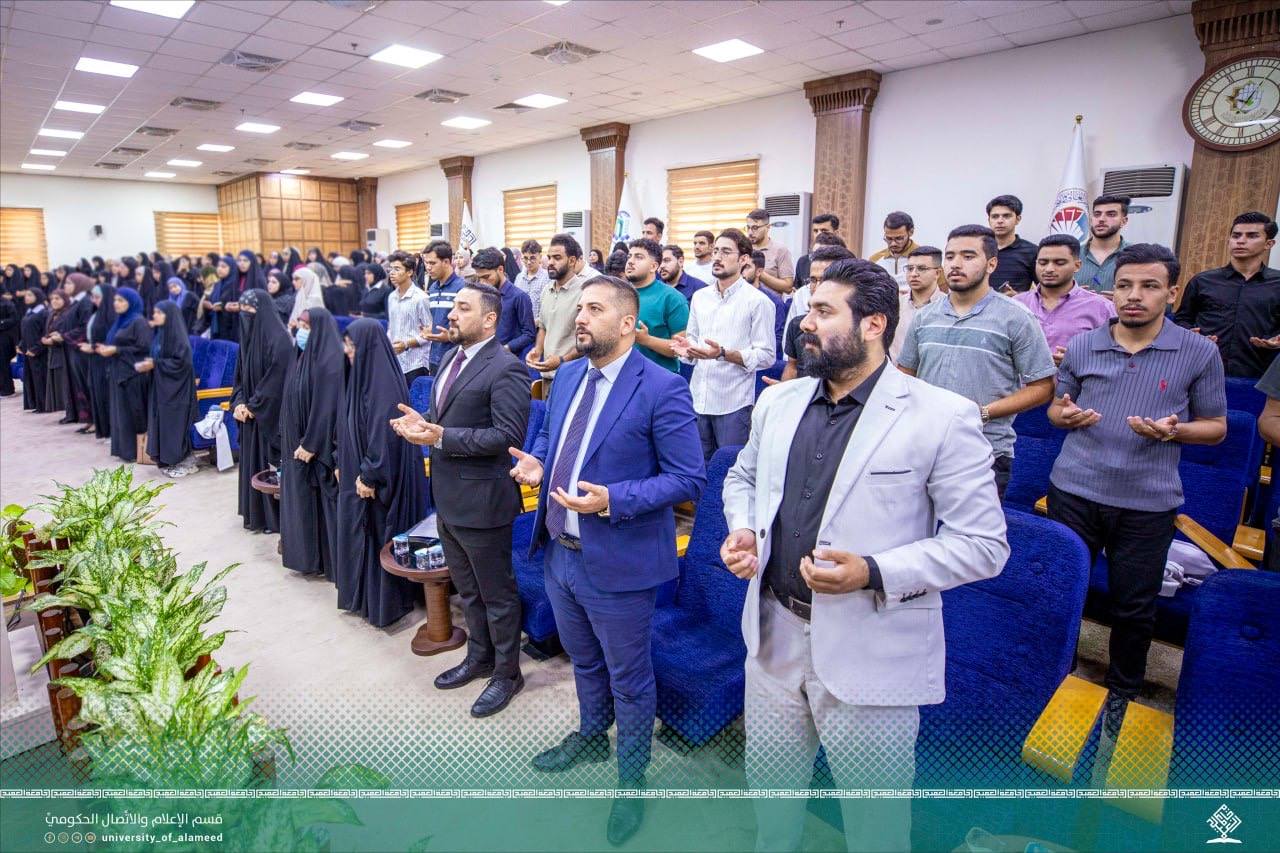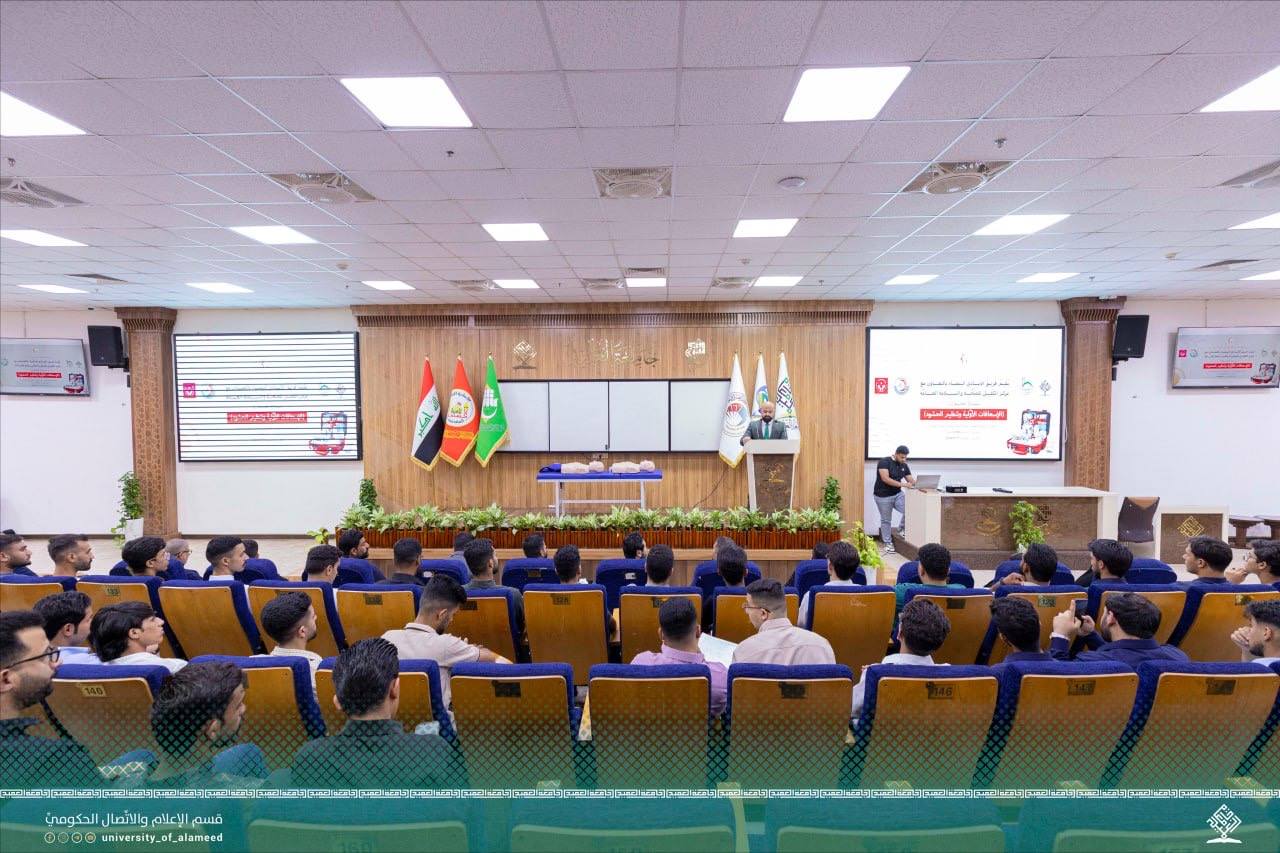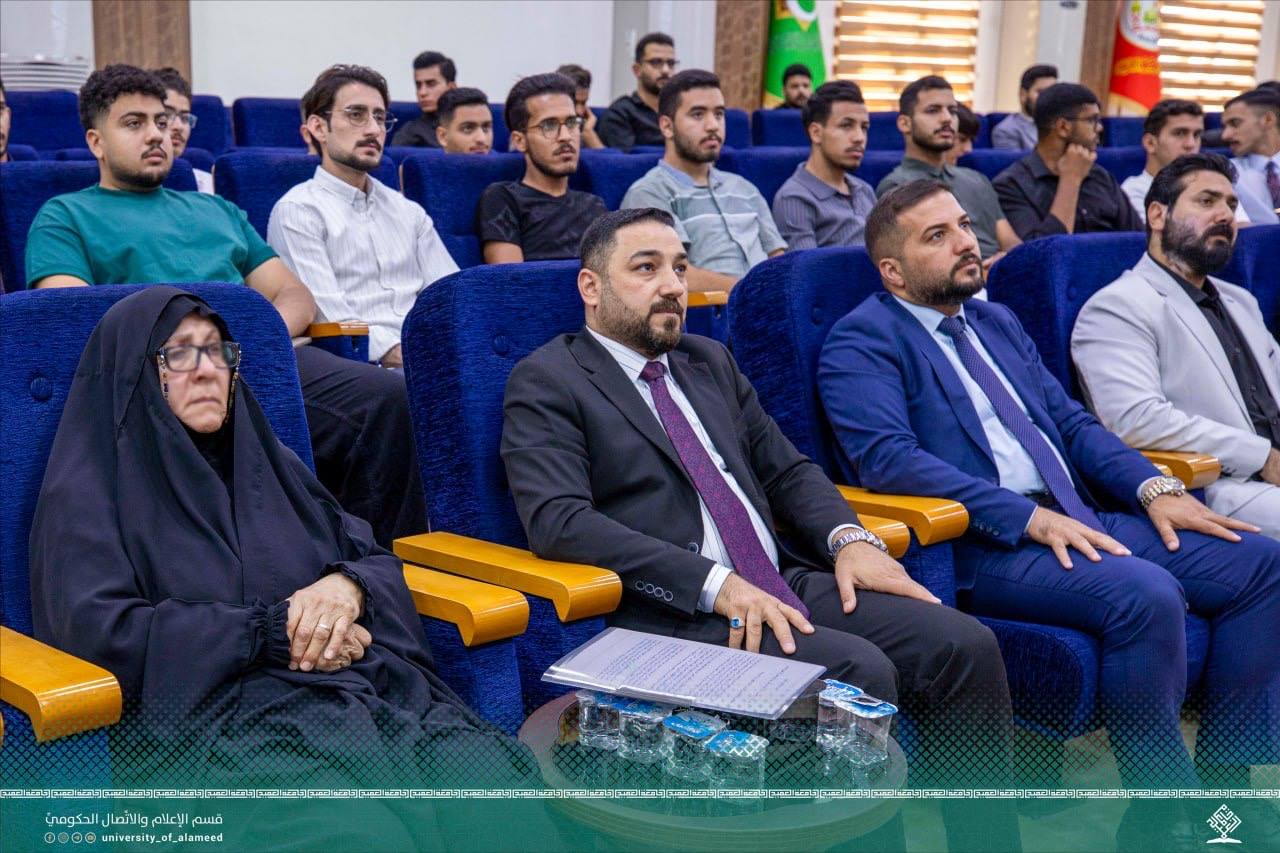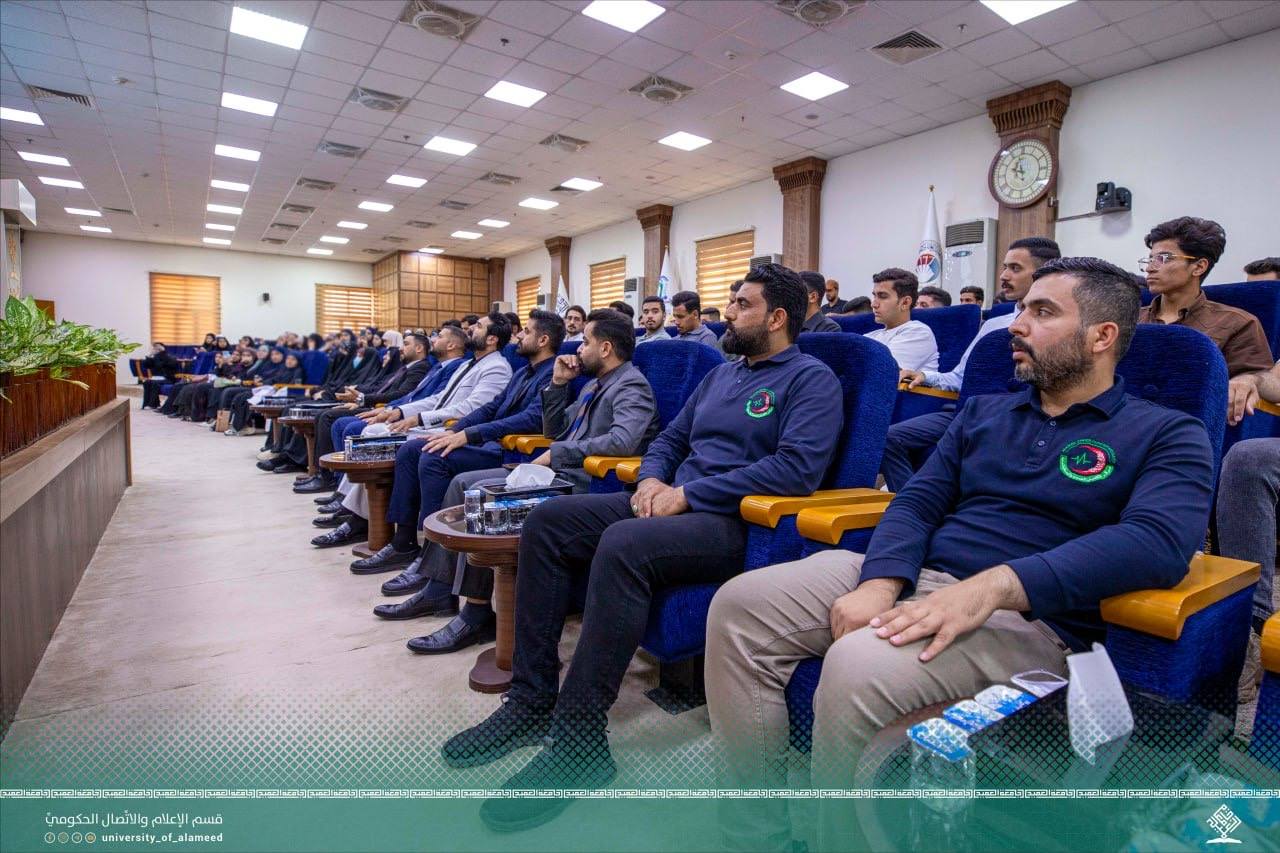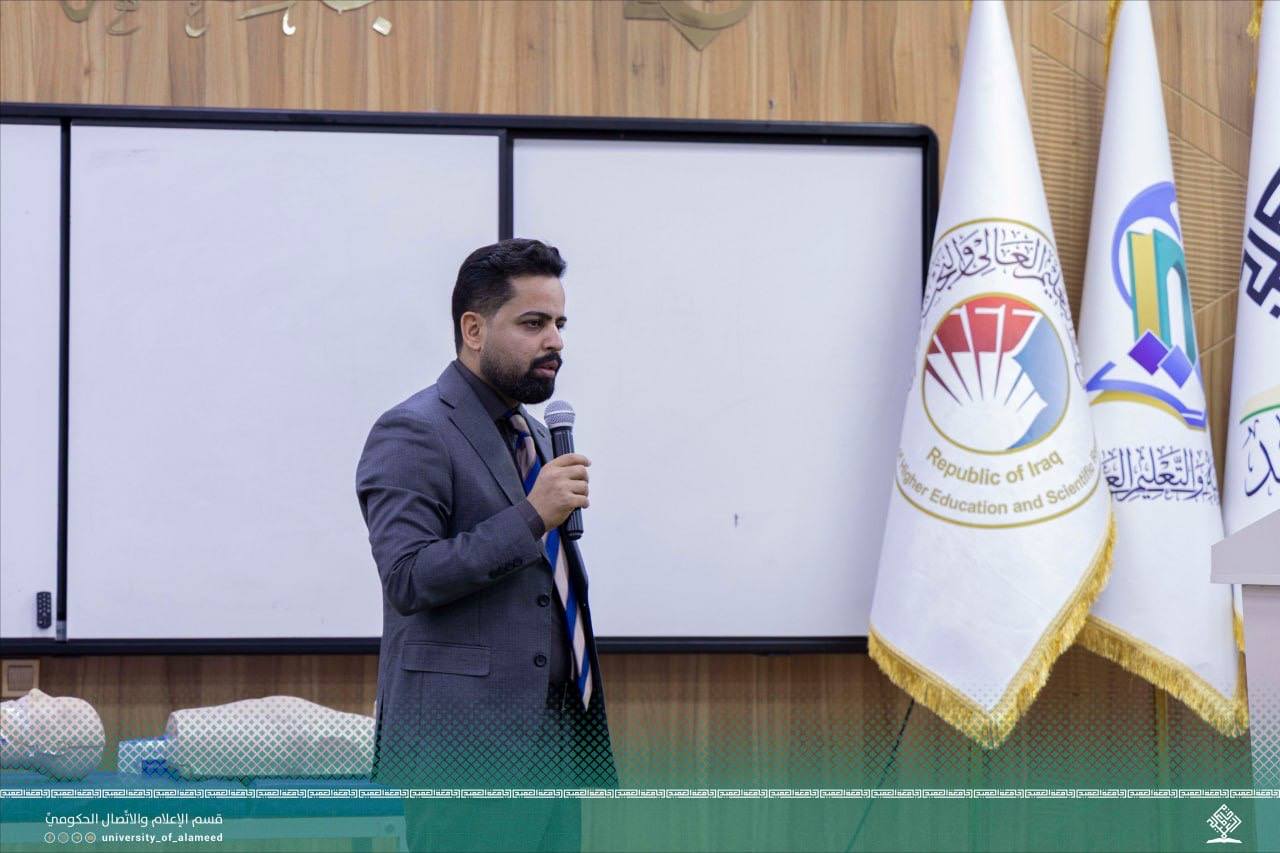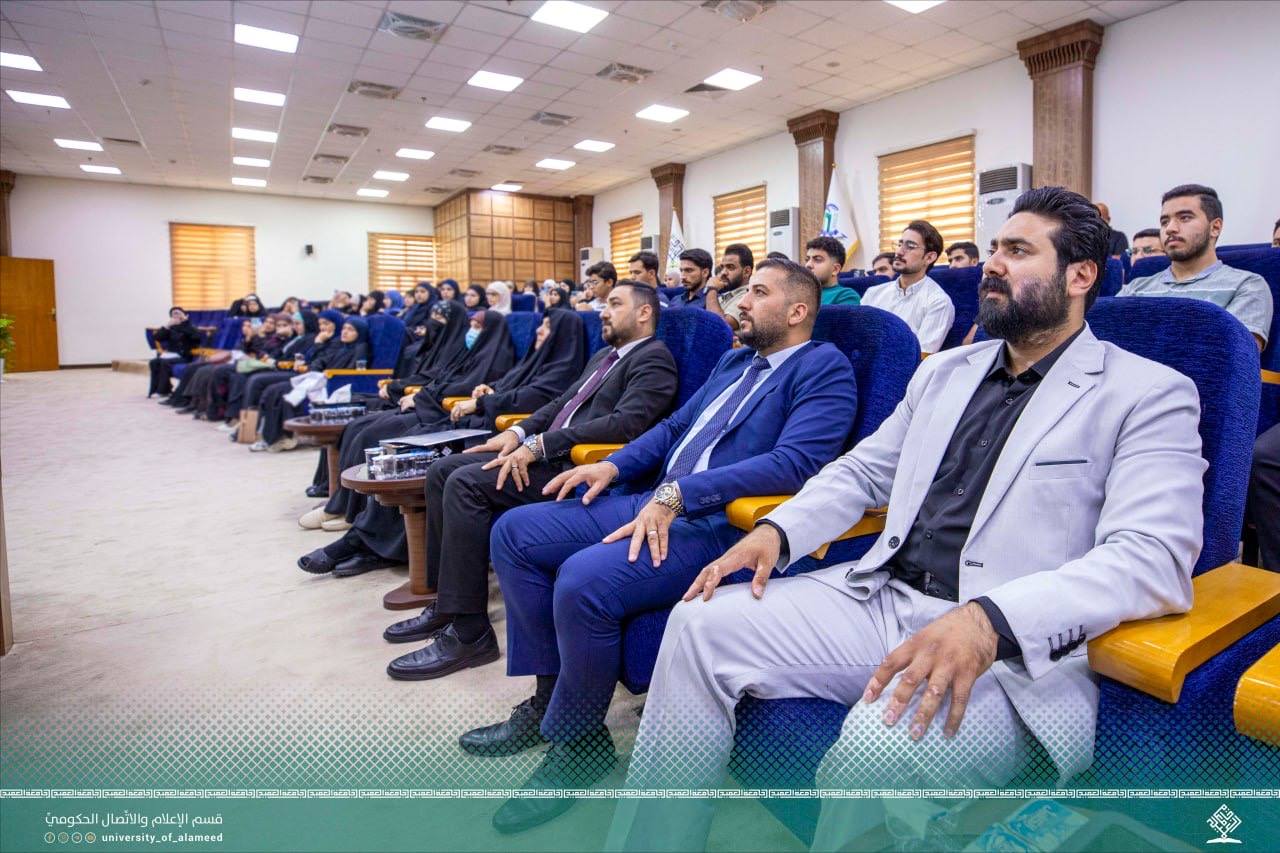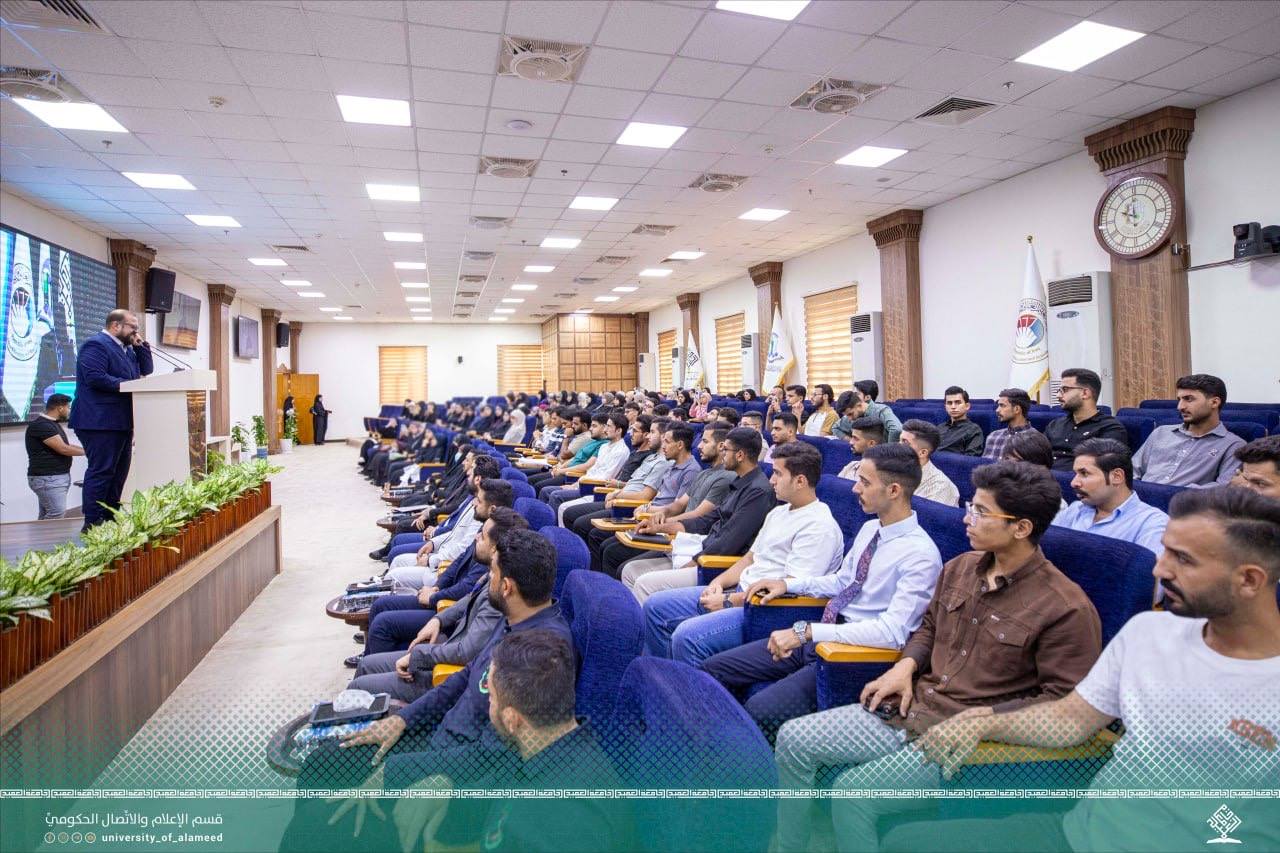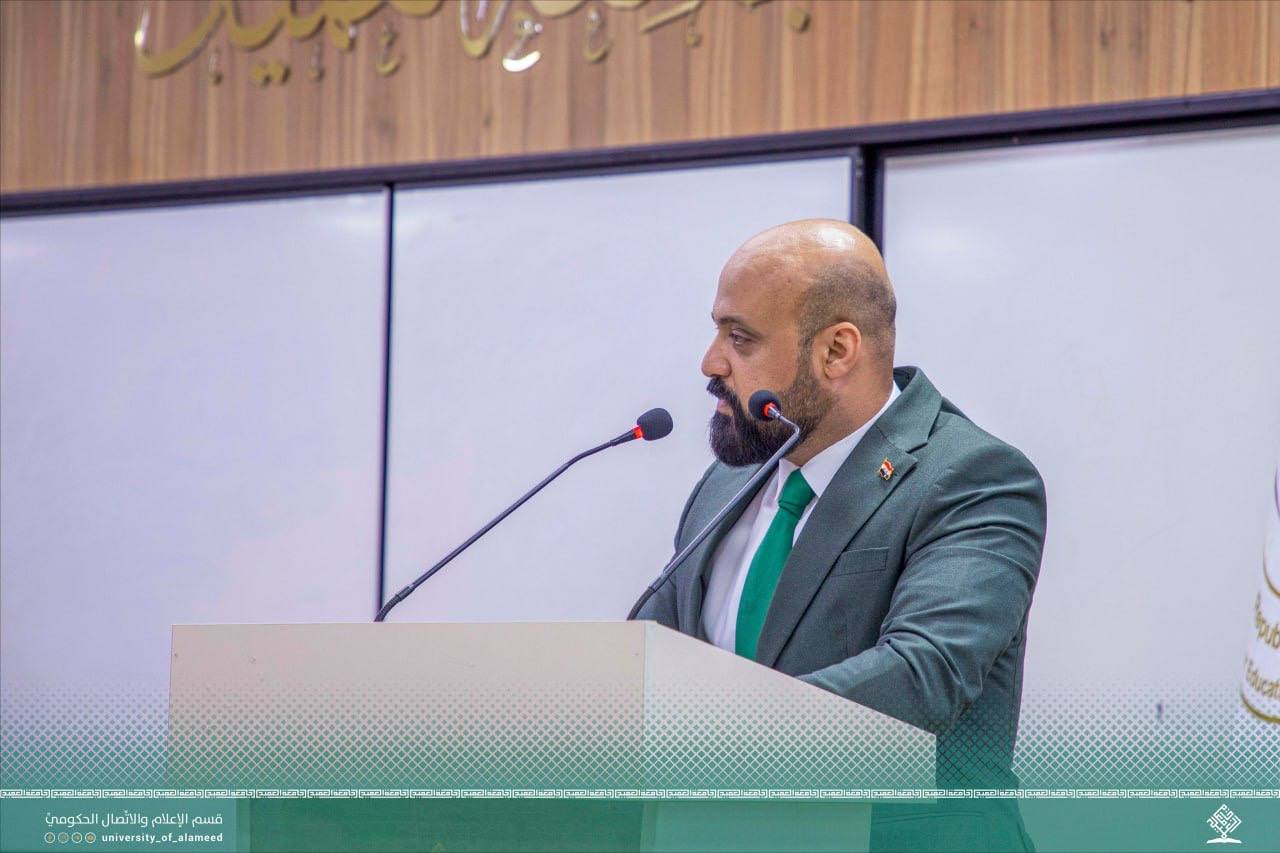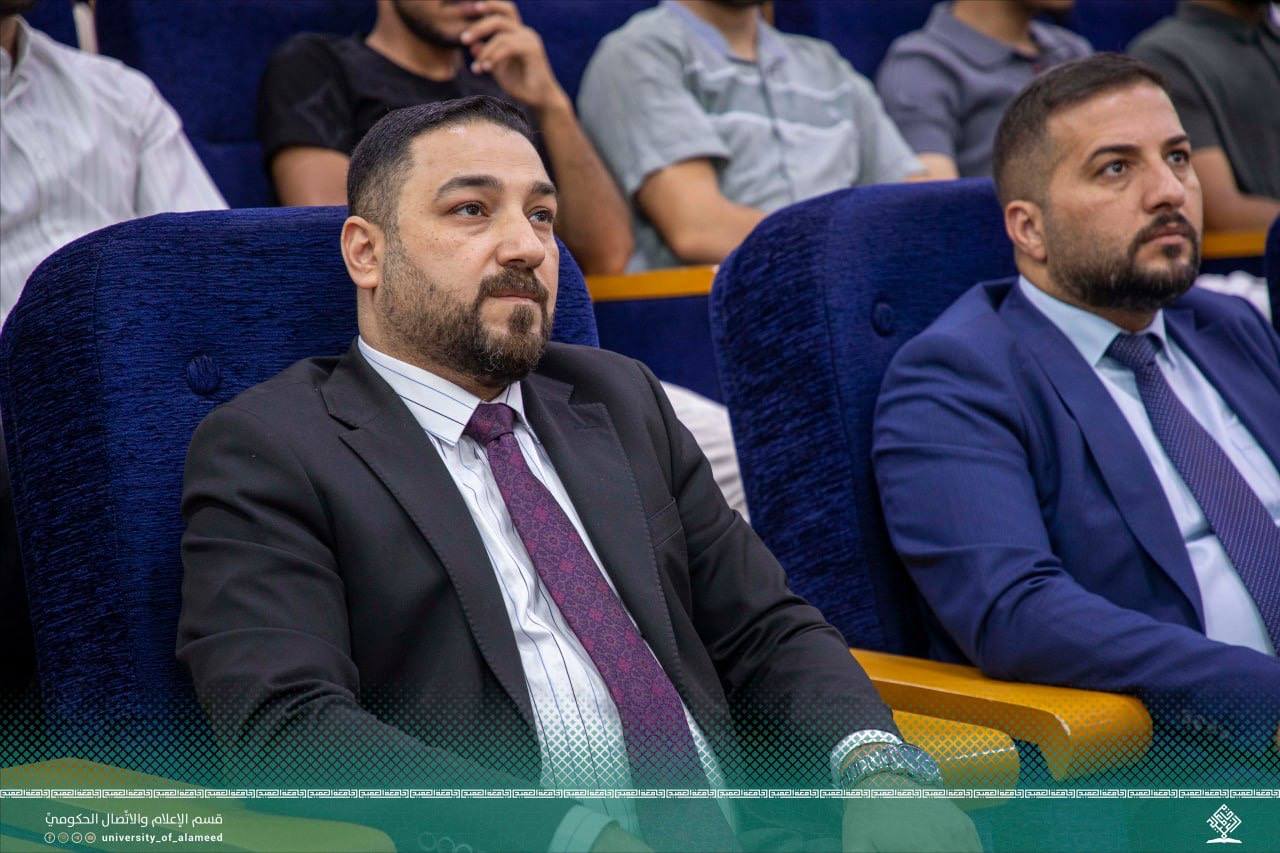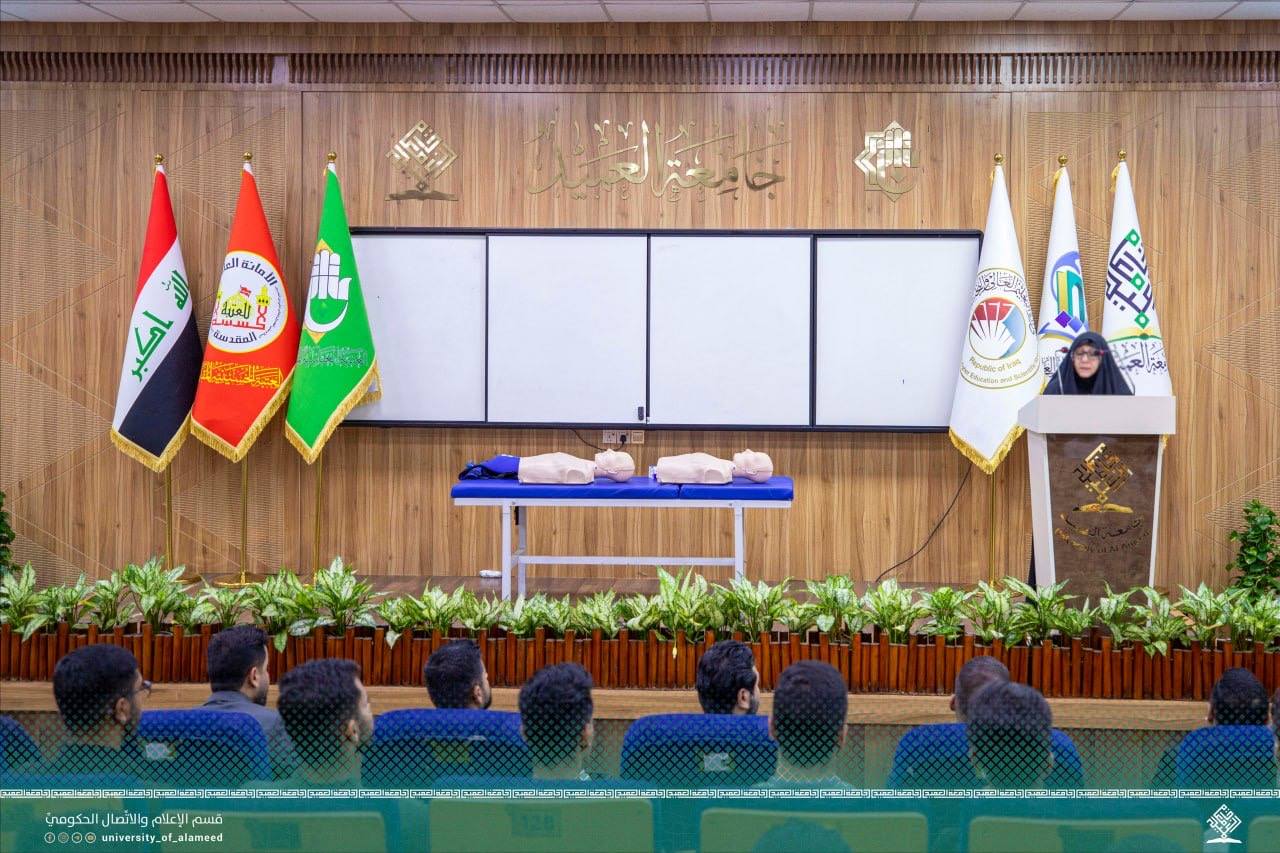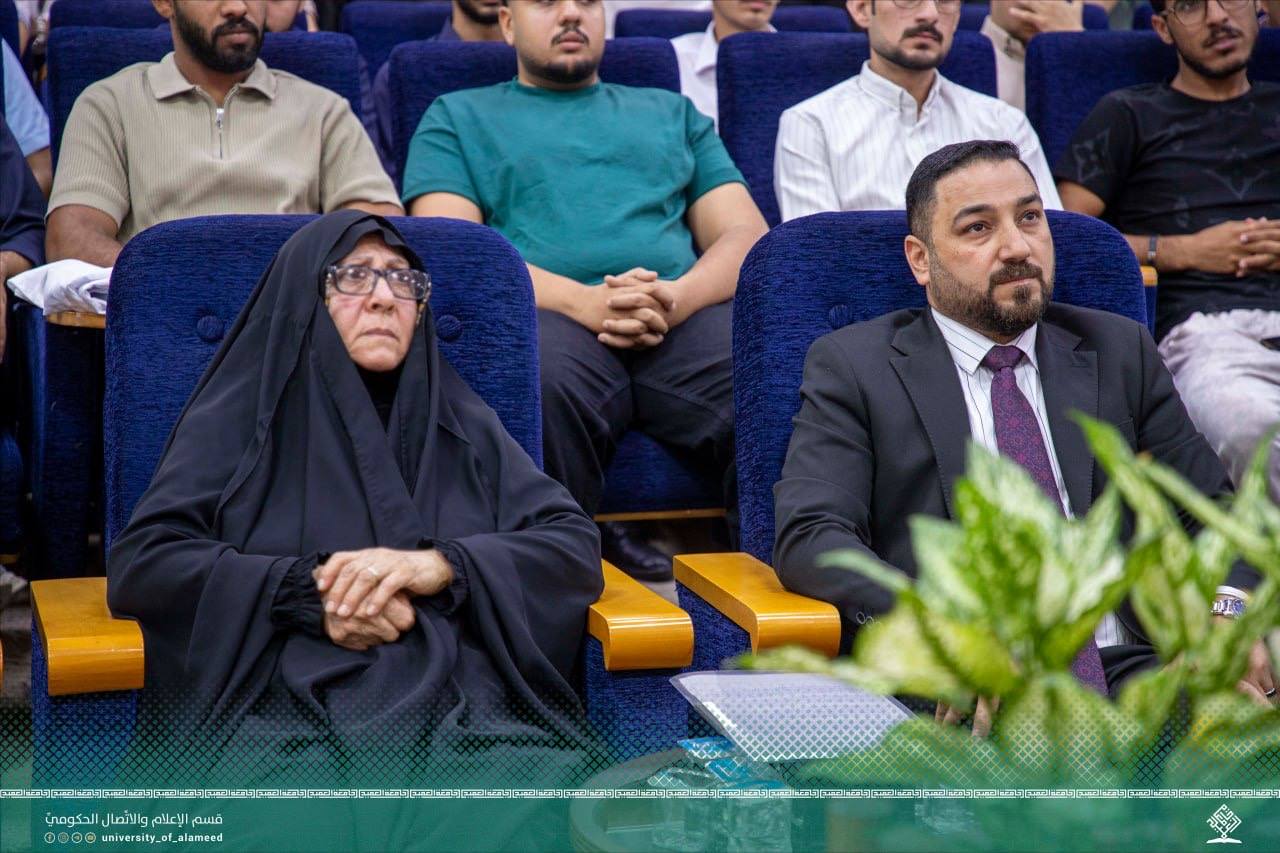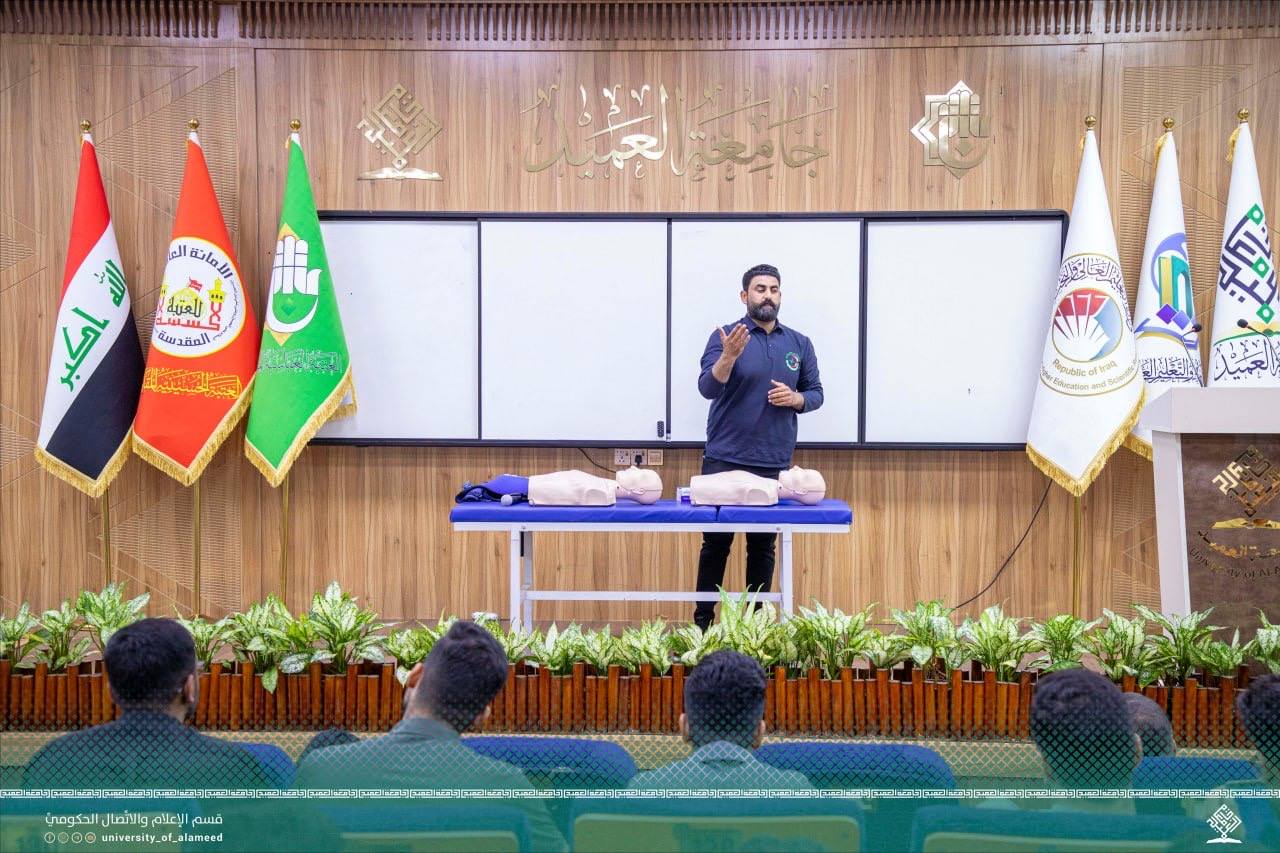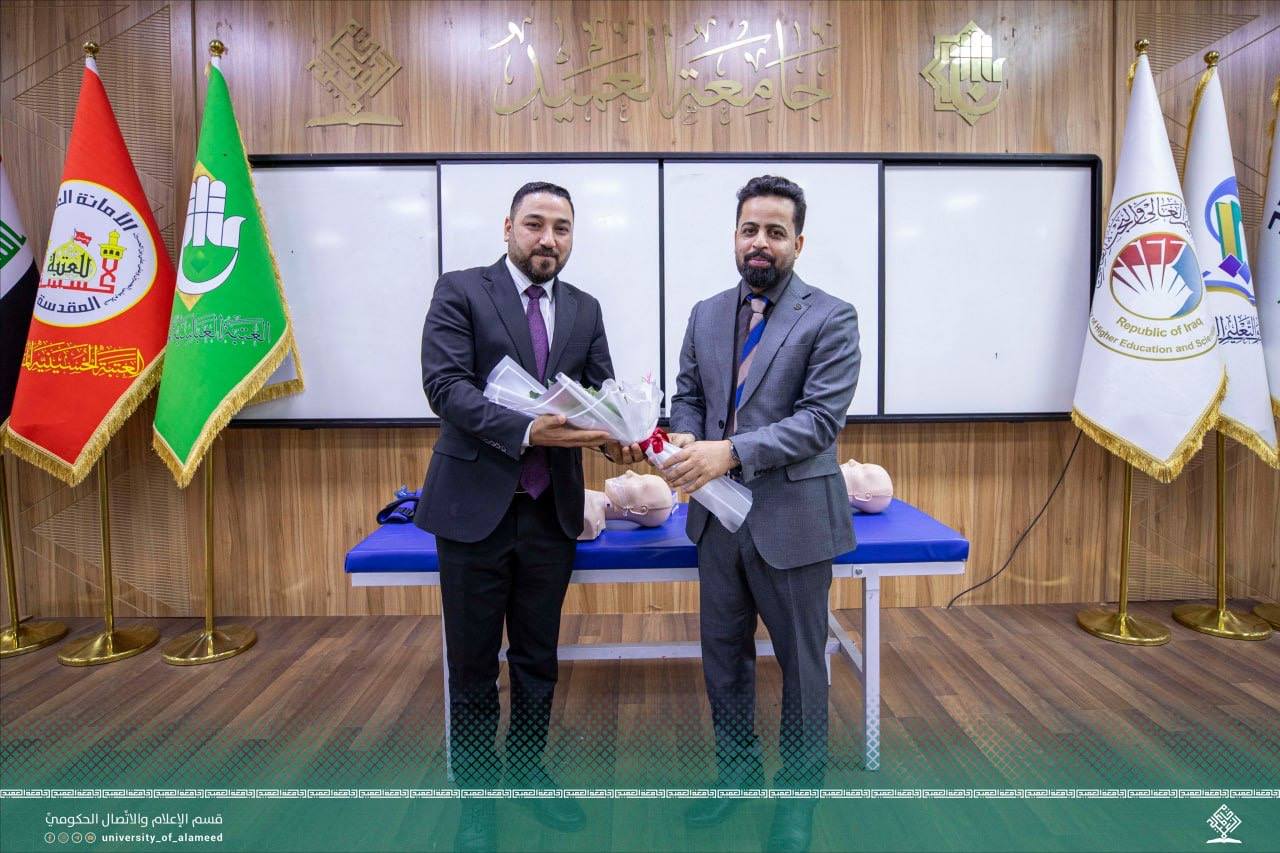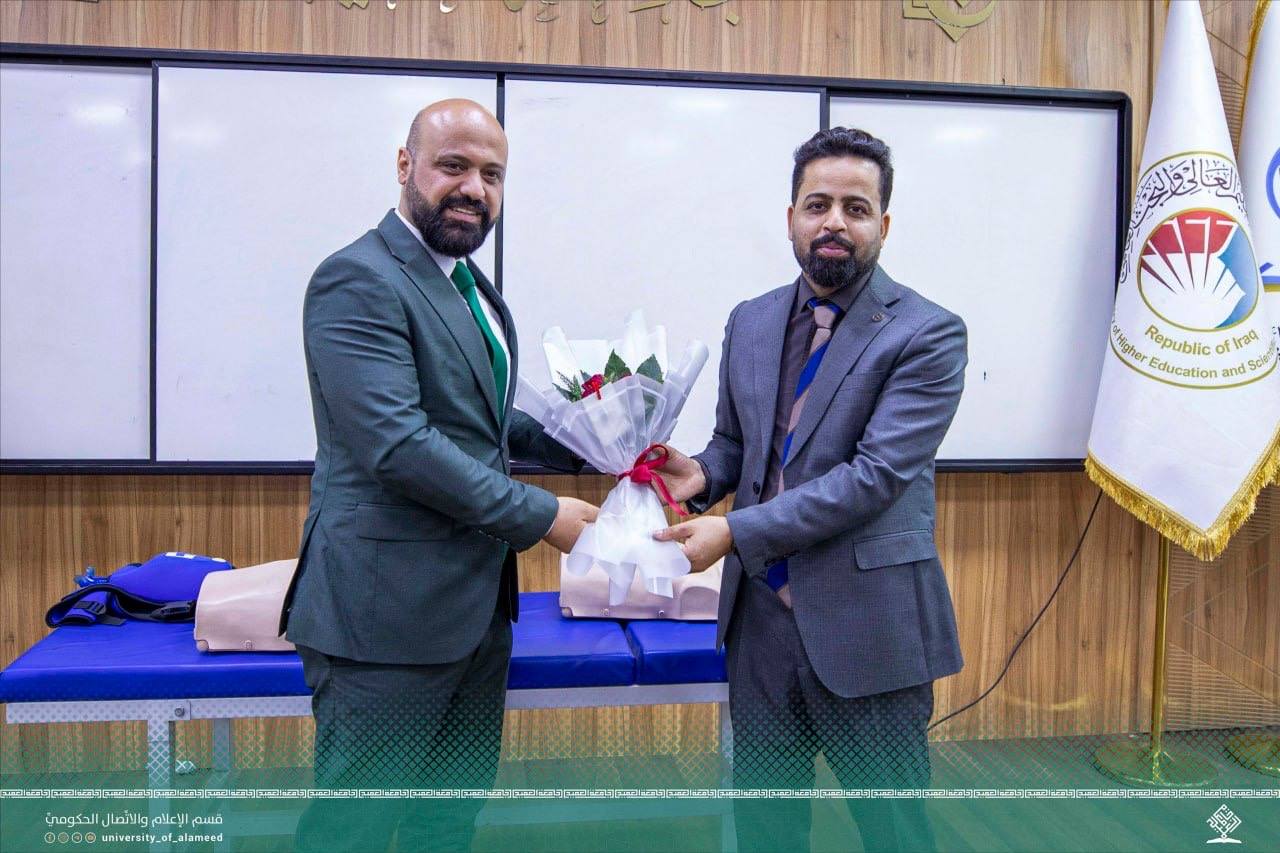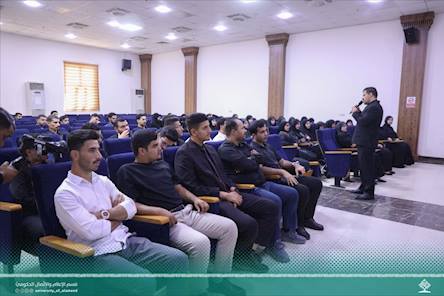
Our university hosted a seminar on first aid and crowd management for the White Hands volunteer team, organized by the Medical Affairs Department of the Holy Abbasid Shrine at the Imam Al-Mujtaba (peace be upon him) Hall, in the presence of representatives from both the Holy Abbasid Shrine and the university.
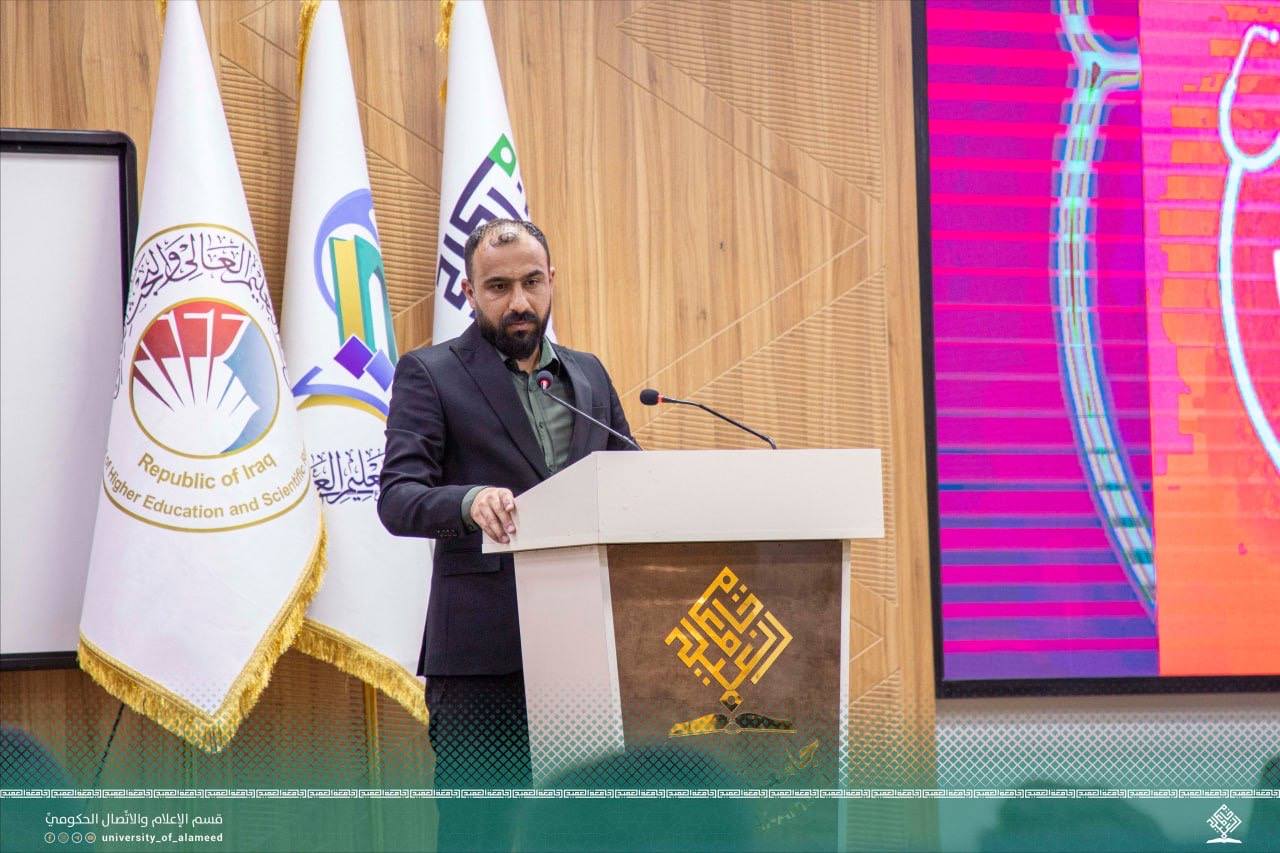
The seminar commenced with the recitation of verses from the Holy Quran, followed by the recitation of Surah Al-Fatiha in mercy for the souls of Iraq's martyrs. Then, the speech of the Holy Abbasid Shrine was delivered by the Head of the Medical Affairs Department, Dr. Haifa Al-Tamimi, who emphasized the importance of spreading health awareness and enhancing first aid and crowd management skills as essential pillars for protecting society and serving others. She pointed out the Holy Shrine's commitment to supporting training and educational programs that contribute to capacity building and the promotion of volunteer work.
She clarified that the seminar targeted a select group of young volunteers who are graduates of medical specialties, seeking to employ their expertise and efforts in serving the pilgrims of the shrines of Imam Hussain and his brother Aba al-Fadl al-Abbas (peace be upon them) by providing health guidance and first aid during the million-man pilgrimages.
She added that the seminar aimed to train volunteers on how to handle emergency situations that pilgrims might face, especially the sick, the elderly, and children, by equipping them with the fundamental information related to first aid and rapid intervention mechanisms in critical situations.
She emphasized the continuous cooperation of the Medical Affairs Department with volunteer teams desiring to develop their medical and emergency response skills. This positively reflects on the level of health services provided to pilgrims and promotes the culture of volunteer work and community service.
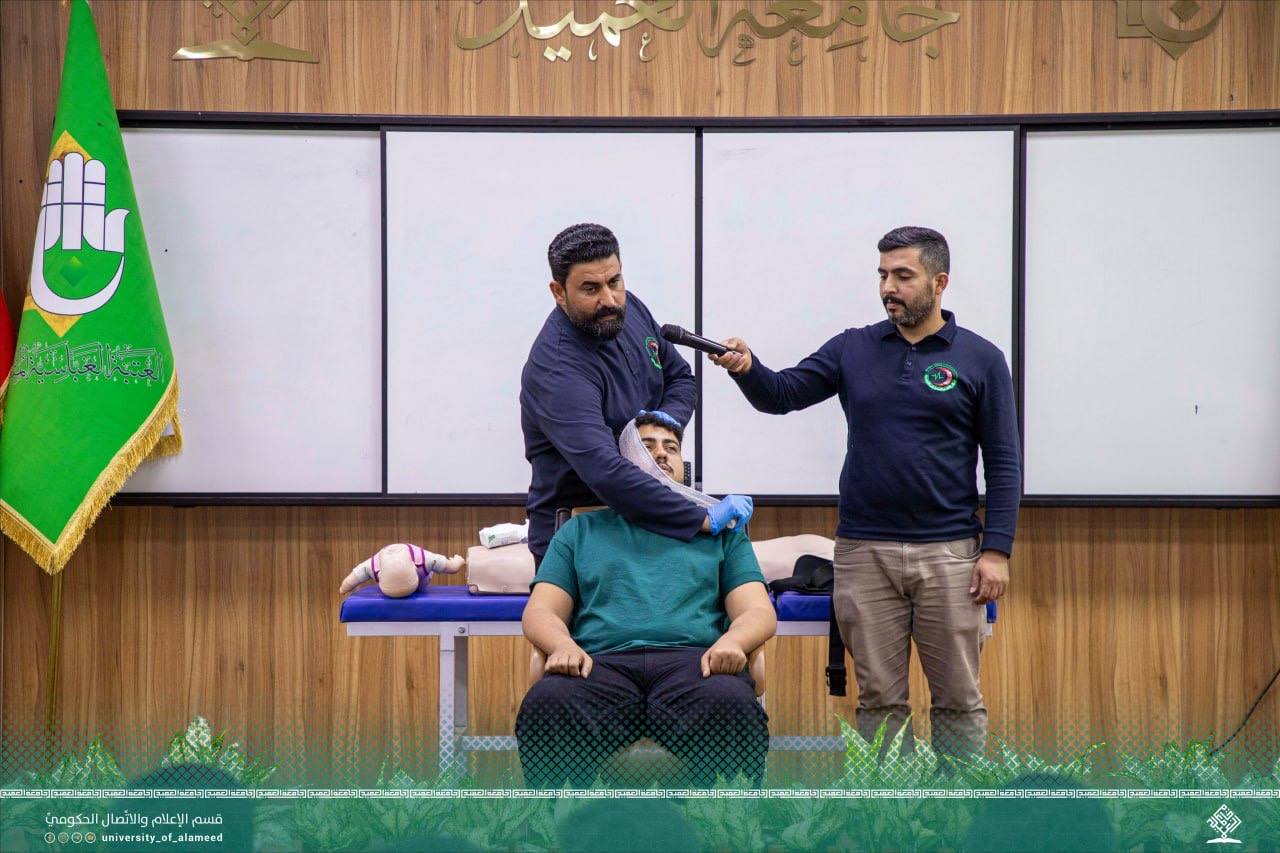
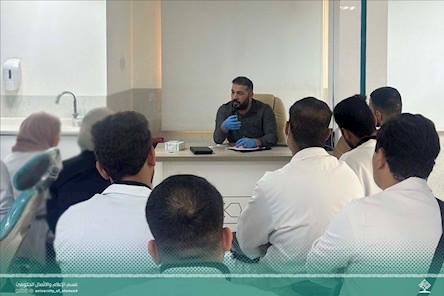
The seminar included practical applications and field exercises addressing methods of dealing with cases of fractures, choking, burns, and other emergency injuries, contributing to raising the volunteers' readiness and their ability to respond effectively to emergency situations.