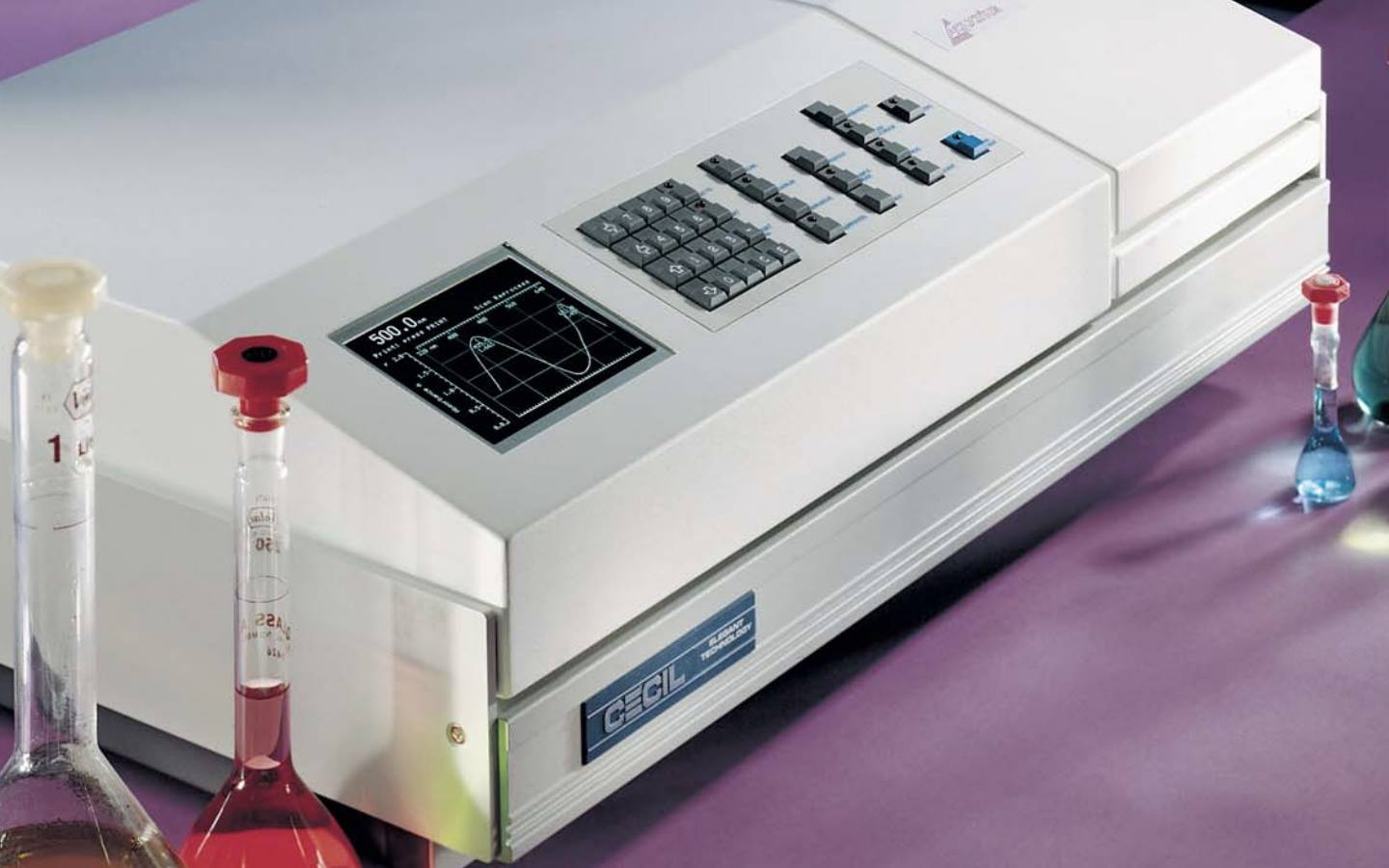
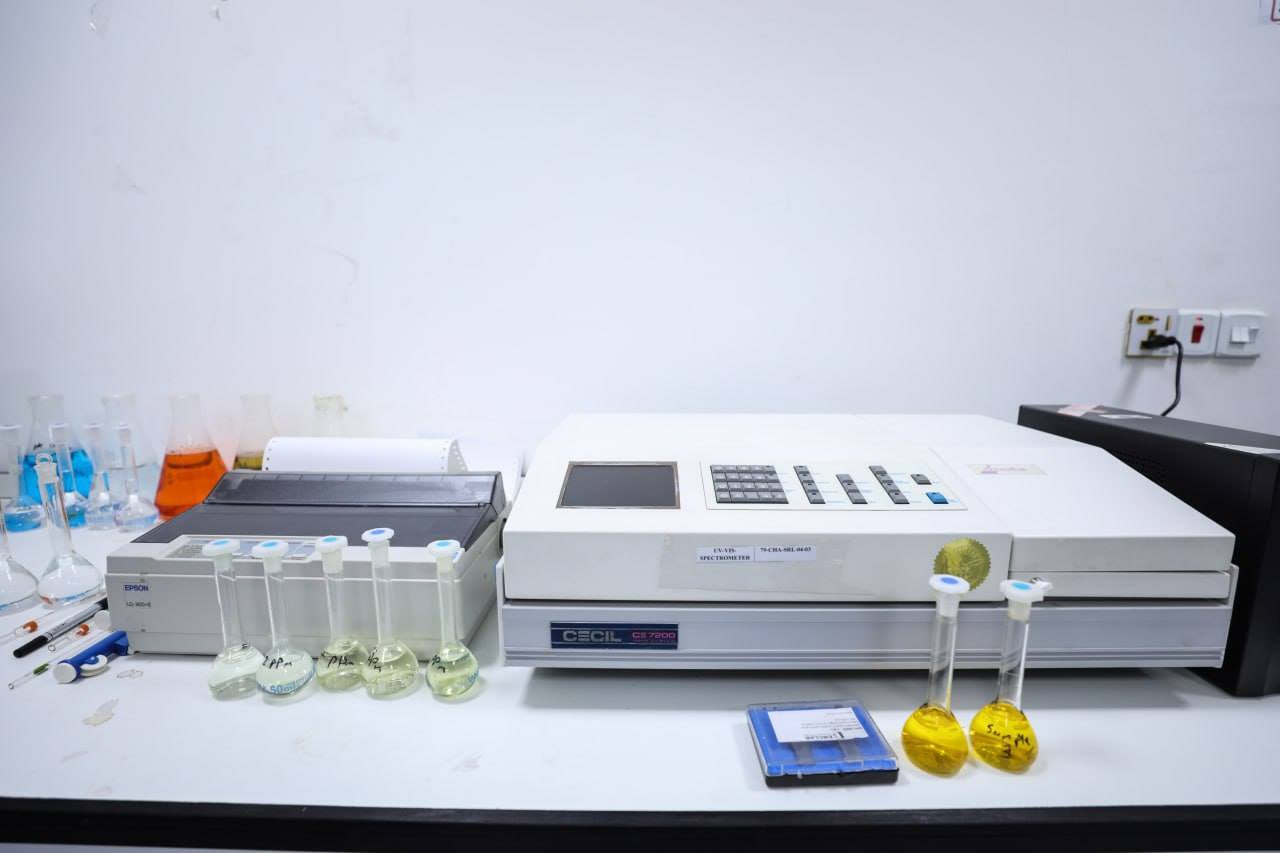
Spectrophotometer
A spectrophotometer is used in many chemical and biological laboratories to measure the concentration of various factors such as phosphates, nitrates, nitrites, sulfates, silica, heavy elements, pigments, and sugars, as this device has a wide range of analytical applications.
The spectrophotometer is considered a quantitative method for measuring the absorbance or reflectance of a sample using wavelengths. The basic principle of this method depends on the idea that “every compound absorbs or reflects light within a specific range of wavelengths”. The device measures the number of photons absorbed by the sample when light passes through it, and therefore the concentration of the substance to be analyzed is obtained. The sample’s absorption of light depends on the color of the sample, and it also measures the reflection of light.
The main applications in which a spectrophotometer can be used include:
* Detecting the concentration of substances.
* Clarifying the structure of organic compounds.
* Characterizing proteins.
* Determining classes of compounds in both pure form and biological preparations.
* Measuring bacterial concentration by assessing the bacterial culture absorbance at a wavelength of 600 nm.